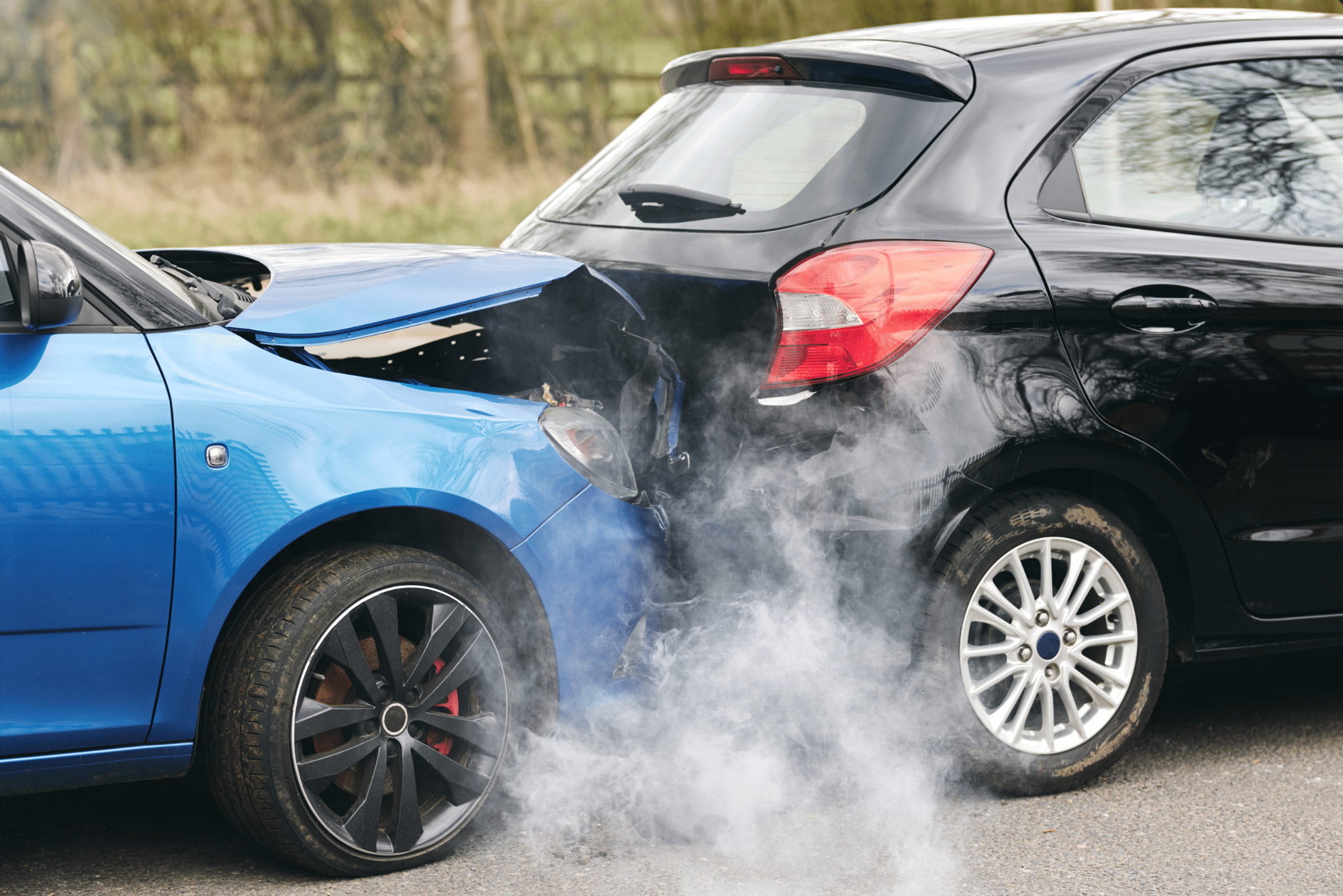
A hit-and-run can occur even after a seemingly minor parking fender-bender. The decisive factor is not just the amount of damage, but whether a party involved in the accident allowed the necessary investigations to take place or waited for an appropriate amount of time.
Under the German Criminal Code (StGB), a hit-and-run is defined as the unauthorized departure from the scene of an accident pursuant to Section 142 of the StGB. A person involved in an accident is guilty of a criminal offense if they leave the scene before allowing their identity, vehicle, and the nature of their involvement to be determined, or before waiting a reasonable amount of time.
An accident, as defined by the regulation, is a sudden event occurring on public roads that is related to the typical hazards of such roads and results in personal injury or property damage that is not entirely trivial. Public roadways may also include freely accessible parking lots and parking garages.
A person involved in an accident is not necessarily only the one who caused the collision. It is sufficient that the person’s own behavior, given the circumstances, may have contributed to the accident. Therefore, cyclists, pedestrians, and passengers may also be considered involved under certain circumstances.
For a hit-and-run to constitute a criminal offense, the person involved must have at least recognized the accident and their possible involvement in it and nevertheless accepted the consequences of leaving the scene. A person who did not actually notice a minor collision does not meet the elements of the offense simply because they could have noticed the accident had they been more attentive.
The law does not specify a fixed waiting period. What is considered „reasonable” depends, among other things, on the severity of the accident, the location, the time of day, traffic volume, the weather, and the likelihood that the injured party will appear.
A blanket recommendation such as „30 minutes is always enough” is therefore legally unreliable. The appropriate waiting time in a busy supermarket parking lot in Mainz-Gonsenheim may differ from that required at night while attending to a damaged vehicle on a quiet side street.
If no one appears, the person involved may not simply drive away. He or she must ensure that the necessary information can be obtained retroactively without delay, usually by reporting to a nearby police station. In particular, the report must include the person’s address, current location, the vehicle’s license plate number, and the vehicle’s location.
A note can get lost, be removed, or be illegible. Furthermore, it often does not allow for a reliable identification of the person, the vehicle, or involvement in the accident.
Anyone who simply leaves their phone number and drives away therefore risks facing a criminal investigation. It is safer to contact the police after waiting a reasonable amount of time and to follow their instructions.
The statutory penalty for hit-and-run ranges from a fine to up to three years in prison. The specific penalty imposed in a given case depends, among other things, on the extent of the damage, injuries, prior convictions, the defendant’s conduct after the incident, and their personal circumstances.
| Possible consequence | Legal Classification |
|---|---|
| Fine | Determined on a daily rate basis. The number and amount are determined separately. |
| Imprisonment | Legally, up to three years is possible; this is particularly relevant in cases involving aggravating circumstances. |
| Points | Depending on the court's decision, an entry may be made in the Driver Fitness Registry. |
| Driving Ban | A person may be prohibited from driving motor vehicles for a limited period of time. |
| Revocation of a Driver's License | The driver's license expires. It is not automatically returned after a certain period of time. |
| Embargo Period | As a general rule, a new driver's license may not be issued for a period ranging from six months to five years. |
| Consequences Under Insurance Law | Third-party liability recourse and reductions in comprehensive insurance coverage are possible. |
Therefore, a specific penalty for a hit-and-run cannot be determined solely on the basis of the repair bill. The question of what the defendant realized about the accident and its possible consequences can also be decisive.
„Especially in the case of parking damage, one should not jump to the conclusion that the driver definitely noticed the contact. Background noise, vehicle size, seating position, and any pre-existing damage must be examined based on the investigation file and the technical circumstances.”
Waldemar Dill, attorney specializing in criminal law
A driver’s license may be revoked if the offense indicates that the defendant is unfit to operate motor vehicles. In cases of hit-and-run, Section 69 of the German Criminal Code (StGB) generally presumes this to be the case if the perpetrator knew or should have known that a person was killed, suffered significant injury, or that substantial damage was caused to another person’s property.
The term „significant damage” does not have a fixed euro threshold that applies uniformly across the country. Courts assess it differently and take economic developments into account. Furthermore, it is not automatically all damages that are relevant, but rather the legally relevant damage to third parties.
The legal basis is set forth in the Section 69 of the German Criminal Code (StGB) on the Revocation of a Driver's License. If a driver’s license is revoked, the court simultaneously orders a suspension. According to Section 69a of the German Criminal Code (StGB), this suspension generally ranges from six months to five years.
A license revocation is distinct from a driving ban: After a driving ban, the existing driver’s license may be used again once the ban period has expired. After a revocation, the driver must reapply for a driver’s license.
No. The 24-hour rule applies only to accidents that occur outside of moving traffic and result exclusively in minor property damage. If the party involved voluntarily cooperates with the subsequent investigation within 24 hours, the court must reduce the penalty or may waive it entirely.
A typical example is parking damage. This discount does not apply in the event of an accident in moving traffic, personal injury, or significant property damage.
The complete requirements can be found in § 142(4) of the German Criminal Code (StGB). This provision is not a general time limit within which any offense can be „reported retroactively” without consequences. Even in cases where the offender is treated favorably, immunity from punishment does not automatically apply.
Anyone who only learns of a possible accident after driving away from the scene finds themselves in a different legal situation. The Federal Constitutional Court has ruled that leaving the scene without initial intent cannot automatically be equated with a justified or excusable departure. Details are explained in the Decision of the Federal Constitutional Court on Section 142 of the German Criminal Code (StGB).
After an accident, the first priority is to provide assistance to any injured persons, secure the accident scene, and ensure that the necessary investigations can be conducted. If no injured party is present, the waiting period and the subsequent report are separate obligations.
Checklist at the Scene of an Accident:
This applies equally to a fender-bender on Rheinallee, a collision in a Mainz parking garage, or an accident on the A60 and A643 highways. The legal standard does not change based on location, but the location and traffic conditions can influence what constitutes a reasonable waiting time.
Defendants have the right to remain silent and should not spontaneously explain the circumstances of the accident to the police. First, it should be determined which observations, damages, video recordings, witness statements, and technical findings are included in the investigation file.
The owner of a vehicle is not automatically the driver either. Assumptions about who the driver is do not replace proof of the offense. However, careless statements can make it more difficult to mount a defense later on.
A Lawyer from Mainz can request access to the case file and verify whether an accident, involvement, awareness, and intentional removal can be proven. For example, in the case of a Criminal defense in Mainz A decision should be made as early as possible on whether it makes sense to make a statement or to remain silent for the time being.
A police summons does not generally require a suspect to appear. The situation may be different in the case of a summons issued by the public prosecutor's office. The relevant rules governing the questioning of suspects are set forth in § 163a of the Code of Criminal Procedure.
An effective defense begins with the question of whether all the elements of § 142 of the German Criminal Code (StGB) can be proven. Not every instance of vehicle damage and not every instance of leaving the scene constitutes a hit-and-run.
In particular, the following should be reviewed:
Depending on the case file, an early written statement can establish exculpatory circumstances and help bring about the dismissal of the investigation. Submitting a statement without reviewing the case file, on the other hand, is risky because unknown evidence cannot be taken into account.
The same principles of criminal procedure apply to those affected in the Rhine-Main region. This applies to both a Criminal defense in Wiesbaden as well as support from a Criminal Defense Attorney in Darmstadt or other cities.
Fees for legal services are determined, depending on the scope and significance of the matter, either in accordance with the Lawyers’ Fees Act (RVG) or an individual fee agreement. The specific amount of work involved depends, among other things, on the stage of the proceedings, the volume of the investigative file, impending driver’s license sanctions, and any required expert opinions.
A reliable assessment is therefore only possible once the charges and the current status of the proceedings are known. In addition to attorney's fees, a conviction may result in further costs associated with the criminal proceedings.
What are the consequences of leaving the scene of an accident without permission during the probationary period?
For new drivers, a hit-and-run offense may result in additional probationary period measures in addition to the penalty. A criminal offense under Section 142 of the German Criminal Code (StGB) that has been legally enforced is considered a serious Category A violation pursuant to Annex 12 of the Driver’s License Regulation. For the first A-violation, the driver’s license authority typically orders a refresher course and extends the probationary period from two to four years. Further violations may result in a written warning, traffic psychology counseling, and ultimately the revocation of the driver’s license.
What happens in the event of an accident involving a rental car or a leased vehicle?
The rules regarding hit-and-run accidents under the German Criminal Code (StGB) apply to rental cars and leased vehicles just as they do to your own car. In addition, drivers must comply with the contractual reporting obligations to the rental company, lessor, and insurance provider. Rental agreements typically require immediate reporting of accidents and may prohibit drivers from acknowledging claims on their own. Failure to report an accident may result not only in criminal proceedings but also in contractual claims for damages or the loss of agreed-upon liability limitations.
Can a passenger also be held criminally liable?
A passenger does not automatically commit the crime of hit-and-run simply because he leaves the scene of the accident together with the driver. Section 142 of the German Criminal Code (StGB) applies to him only if his own conduct, under the circumstances, could have contributed to causing the accident. Criminal liability for aiding and abetting may apply if the passenger intentionally assists the driver in leaving the scene unlawfully. Mere presence or subsequent silence is generally not sufficient for this.
Does the vehicle owner have to say who was driving?
The vehicle owner is not automatically penalized for a hit-and-run simply because the vehicle involved is registered in his or her name. The investigating authorities must prove who was driving. Family members may have the right to refuse to testify, while suspects are permitted to remain silent regarding the matter. If the driver remains unidentified following a traffic violation, the administrative authority may, under the conditions set forth in § 31a of the Road Traffic Licensing Regulations (StVZO), order the keeper to maintain a logbook, regardless of any criminal proceedings.
Who is the best lawyer to hire if you're facing a charge of leaving the scene of an accident?
A qualified attorney is distinguished by a practice focus on criminal law, experience with traffic offenses, early access to case files, and a realistic assessment of the evidence as well as potential driver’s license sanctions. Attorney Waldemar Dill meets these criteria with his practice focused on criminal law and a defense strategy that begins as early as the preliminary investigation. Exculpatory circumstances are examined early on in order to secure a dismissal of the case whenever possible and prevent the filing of charges.